News

Yellow, Cloudy Headlights: Causes and Restoration Guide

2026-11-20 0 Leave me a message

Yellow, cloudy headlights are one of the most common complaints on vehicles older than five years, and one of the most misunderstood. Most owners assume the lens has simply gotten dirty; a wash does not help, because the haze is not on the surface as dirt — it is degradation inside the polycarbonate itself.

This guide explains what actually causes the yellowing, how to judge whether restoration will work, how long a proper restoration lasts, and when replacing the headlight assembly is the more economical decision.

Related guide: if the problem is moisture or fog inside the lamp rather than yellowing, see our article on headlight condensation — that is a sealing and vent issue, not a lens aging issue.

Why headlight lenses turn yellow

Modern headlight lenses are polycarbonate, a strong and optically clear plastic that would degrade rapidly under sunlight without protection. For that reason, every new lens is coated at the factory with a hard clear coat containing UV absorbers.

Oxidation begins when that coating is worn through. UV light attacks the exposed polycarbonate, breaking down its surface layer into a yellowed, porous, microscopic-rough texture. Three factors accelerate it:

Sun exposure and climate. Vehicles parked outdoors in high-UV regions show lens failure years earlier than garaged vehicles.

Washing and road abrasion. Every automatic car wash and every grit-blasted highway mile removes a little of the protective coating. The process is slow and invisible until the haze appears.

Chemicals and heat. Harsh cleaners, brake dust removers and engine heat around the lamp all shorten coating life.

The key point: the yellow layer is degraded plastic, not contamination. That is why wiping, polishing with household compounds, or "toothpaste tricks" produce a short-lived shine at most.

Step one: decide whether the damage is outside or inside

Before choosing a route, look at the lens carefully in good light:

What you see
What it means
Sensible route
Yellow or frosted surface, clear inside, no cracks
Coating worn, outer layer oxidized
Restoration works
Haze that sits behind the lens, fogging after rain or car wash
Seal or vent failure
Reseal or replace — polishing will not reach it
Fine cracks in the lens surface, flaking coating
Coating failure has gone structural
Restoration holds only briefly; replacement is more realistic
Yellowing plus water inside, corroded reflector
Combined aging and leak
Replace the assembly

Restoration is a surface process. It can only correct damage that exists on the outside of the lens. Anything happening inside the housing needs a different fix.

What a proper restoration actually involves

Genuine headlight restoration is a controlled re-surfacing, not a quick polish. In practice it means abrading the oxidized layer away with progressively finer grades, refining the surface to optical clarity, and then applying a new UV-protective coating to seal the fresh polycarbonate.

The coating step is the one that decides how long the result lasts. A lens that is sanded and polished but left uncoated looks clear on day one and begins re-oxidizing within weeks, because the raw polycarbonate has no protection at all. A restored lens with a proper new coating generally holds its clarity for a couple of years or more, depending on climate and parking habits.

This is also why restoration results vary so much between providers: the sanding is easy to see, the coating quality is not.

When restoration is not the answer

There are four situations where spending money on restoration is a poor decision:

Cracked or flaking lens surface. If the coating has started to peel or the polycarbonate shows fine crazing, abrading cannot rebuild a uniform surface, and the new coating will not bond evenly.

Delamination or deep yellowing that has changed lens thickness. Heavily degraded lenses scatter light even after polishing, because the damage has altered the optical geometry.

Water inside the housing. Sealing and vent problems need resealing or replacement; polishing the outside changes nothing.

Repeat failure. If a lens was restored once without a proper UV coating and has yellowed again within a year, a second restoration on compromised plastic rarely holds. Replacement becomes the better value.

The workshop perspective: batch decisions

For repair shops, fleets and resale preparation, the decision is usually made per vehicle but priced per hour. A two-lens restoration is a predictable, materials-light job — which is exactly why it is popular. But it pays to check lens condition honestly before quoting: a badly cracked pair of lenses will come back for a second visit when the coating lifts, and the rework costs more than a replacement assembly would have.

A practical rule used by many bodyshops: if the lens is structurally sound and the vehicle will stay in service for another two to three years, restore. If the lens is cracked, delaminating, or the vehicle is being prepared to a strict inspection standard, replace.

Choosing a replacement headlight assembly

When replacement is the better route, the selection criteria are straightforward:

Fitment first. Headlights vary by trim level, market specification and production run. Order against the VIN or the OE number, not just the model year — connector types and mounting points differ between variants.

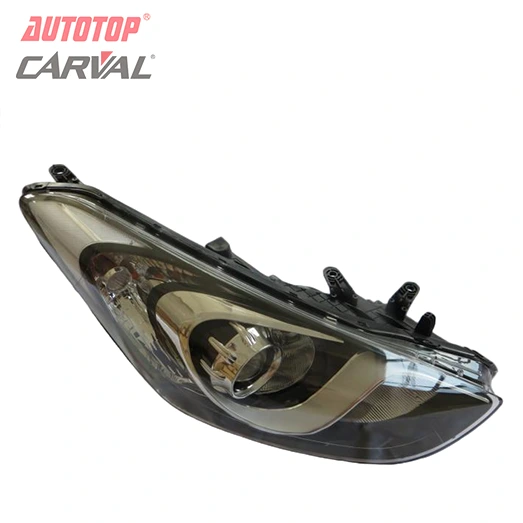
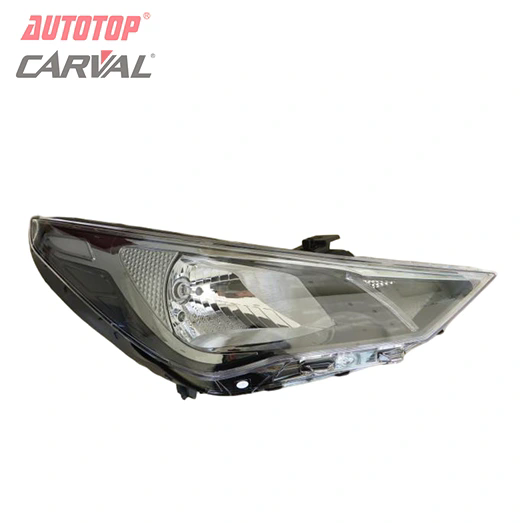
Lens material and coating. A replacement lens should be UV-coated polycarbonate; uncoated lenses age quickly and undo the reason you replaced the part.

Sealing quality. The housing should arrive with an intact, continuous lens-to-housing seal. Poor sealing recreates the condensation problem you may have just solved.

Complete versus partial. Decide whether you need the full assembly or only the lens shell, and confirm what the quote includes — bulbs, ballasts and trim are not always part of the unit.

FAQ

How long does headlight restoration last? With a proper UV coating applied after polishing, a restoration generally holds for a couple of years or more, depending on sun exposure and washing habits. An uncoated polish can re-oxidize within weeks.

Can badly yellowed lenses pass inspection after restoration? In many cases yes, if the beam pattern and brightness recover with the clarity. Heavily degraded lenses that scatter light even after polishing may still fail; replacement is the reliable route then.

Is it cheaper to restore or replace? Restoration is cheaper per event; replacement removes the repeat-visit risk on badly degraded lenses. Judging which is more economical depends on lens condition and how long the vehicle will stay in service.

Why did my headlights turn yellow again after polishing? Almost always a missing or poor-quality protective coating. Polished polycarbonate without a new UV seal re-oxidizes quickly.

Can I replace just the lens? Some assemblies allow it, many do not — the lens is often bonded to the housing. Check availability for your specific OE reference before planning the job.

About the manufacturer

Changzhou Jiahong Auto Parts Factory manufactures automotive lighting and exterior body parts, including headlight and tail light assemblies for Hyundai, Kia, Renault, Chevrolet and other applications, under its AUTOTOP brand. Assemblies are produced with UV-coated polycarbonate lenses and checked for sealing and function before shipment. Send your OE number or VIN and we will confirm the correct variant before quoting.


Related News
Leave me a message
google-site-verification: googled66ebb995ed89342.html
 
X
We use cookies to offer you a better browsing experience, analyze site traffic and personalize content. By using this site, you agree to our use of cookies. Privacy Policy
RejectAccept