News

Hyundai Elantra Bumper Supplier | Fitment & OE Numbers

2026-10-28 0 Leave me a message

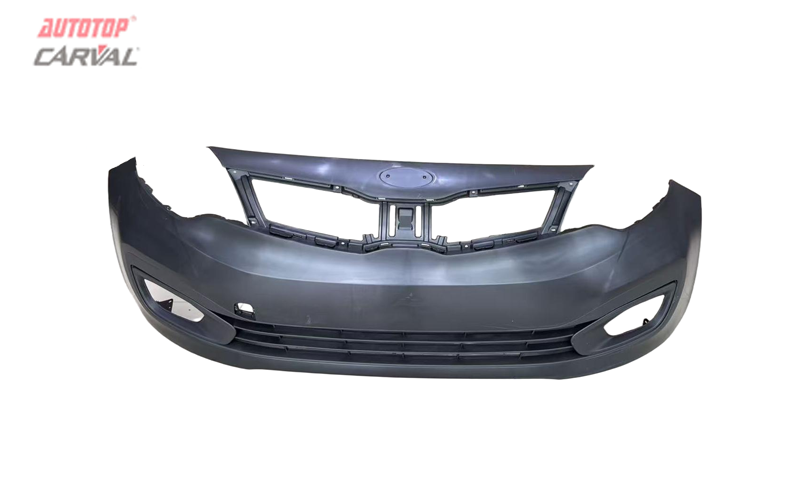
Hyundai Elantra Bumper Supplier: Fitment, Materials and Bulk Ordering Guide

Choosing a Hyundai Elantra bumper supplier usually comes down to one thing: whether the part fits the first time. The Elantra has been produced across several generations and sold under different nameplates — Avante in its home market, i35 in a number of export regions — and a bumper cover designed for one model year will often sit incorrectly on the next. For distributors, body shops and fleet operators, that gap turns into returned parts, extra labour hours and avoidable claims.

This guide explains which Elantra generations a bumper range typically covers, the difference between a bumper cover and a reinforcement bar, the material and finish options available, and the checks worth completing before placing a bulk order.

Elantra generations and chassis codes

Model year on its own is not enough to confirm fitment. Hyundai revised the Elantra's front and rear ends mid-cycle on more than one occasion, and regional naming adds a second layer of confusion. Ask for the chassis code, or where possible the VIN, before confirming an order.

Generation

Chassis code

Typical model years

Fitment notes

4th

HD

2006–2010

Pre- and post-facelift front ends differ

5th

MD / UD

2010–2015

High export volume; also sold as Avante and i35

6th

AD

2015–2020

Fog lamp and sensor cut-outs vary by trim

7th

CN7

2020 onward

Revised mounting pattern and bracket layout

Model years vary between markets, and a vehicle may have been registered a year or two after manufacture. Confirm against the VIN or the original part number wherever possible.

Bumper cover or reinforcement bar?

One of the most common ordering mistakes is buying the wrong half of the assembly.

· Bumper cover — the painted outer shell. This is the part most often damaged in a low-speed impact, and the part most distributors keep in stock.

· Reinforcement bar — the metal or composite structure mounted behind the cover. It is replaced when an impact has been hard enough to deform it.

· Retainers, brackets and absorber — the clips, side brackets and foam absorber that hold the assembly together. These are inexpensive, frequently broken, and worth ordering alongside the cover.

If a vehicle has taken a front-end hit, inspect the absorber and brackets before assuming only the cover needs replacing. A deformed reinforcement bar will hold a new cover out of alignment.

Material and finish options

Most aftermarket Elantra bumper covers are injection-moulded from modified polypropylene. The specification affects flexibility, paint adhesion and how the part behaves in cold weather.

· PP + EPDM — polypropylene modified with rubber. A common choice for exterior body panels, balancing flexibility with impact resistance.

· TPO — often used where a slightly stiffer finish is preferred.

· Surface finish — supplied primed, unpainted, textured black, or painted to a colour code. Primed covers are the usual choice for distributors, because body shops generally prefer to colour-match on site.

Cut-outs for fog lamps, parking sensors, headlight washers and tow hook covers must be confirmed before production begins. These vary by trim level even within the same model year, and a cover with the wrong aperture is difficult to modify after moulding.

Why Elantra bumpers are replaced so often

· Low-speed impacts — parking and urban collisions account for the majority of front and rear cover replacements.

· Retainer failure — mounting clips become brittle with age and often break during removal, even when the cover itself is undamaged.

· UV exposure — prolonged sun exposure fades and weakens unpainted plastic, particularly on textured trim.

· Missing trim pieces — tow hook caps and sensor grommets are frequently lost separately from the cover.

Checks before placing a bulk order

For buyers ordering at container volume, the following steps reduce the risk of a costly mismatch:

1. Confirm the chassis code, not only the model year.

2. Confirm sensor and fog lamp cut-outs for the trim levels in your market.

3. Agree the surface finish — primed, textured, or painted to a colour code.

4. Request a fitment check — trial installation photos or a dimensional report.

5. Confirm packaging — individually boxed, or bulk-wrapped on a pallet. Export packaging affects both freight cost and damage rate.

6. Get MOQ and lead time in writing, including tooling time if a new mould is required.

7. Clarify the claim process — how transit damage and fitment disputes are handled.

Installation overview

A front or rear cover swap is straightforward for a trained technician, but the surrounding trim needs care.

1. Disconnect the battery where sensor or lighting wiring is involved.

2. Remove the fasteners along the wheel arches and undertray.

3. Release the side retainers gently — these break easily on older vehicles.

4. Transfer the sensors, fog lamps and trim from the original cover, or fit new ones.

5. Seat the new cover, check panel gaps, then tighten in sequence.

Replacement retainers cost little and are worth keeping in stock.

Frequently asked questions

Do you supply front and rear covers for the Elantra? Our range covers front and rear bumper covers across the generations listed above. Availability varies by chassis code, so send the model year and VIN and we will confirm which part numbers are in production.


Related News
Leave me a message
 
X
We use cookies to offer you a better browsing experience, analyze site traffic and personalize content. By using this site, you agree to our use of cookies. Privacy Policy
RejectAccept