Whatsapp
When a front bumper needs replacing, the part itself is usually the smallest line in the budget. What determines the final bill is everything around it: paint, labour, the parts hidden behind the cover, and — on newer vehicles — sensor calibration after the work is done. Buyers who understand that structure make better decisions, get cleaner quotations and avoid the most common way of paying twice: ordering the wrong part.
This guide breaks down what a bumper replacement actually consists of, why quotations differ, and how to choose the right cover so the rest of the budget stays under control. It follows on from our earlier guide on deciding whether a cracked bumper should be repaired at all.
A bumper replacement project has five cost blocks:
If the vehicle is under warranty or the damage is covered by insurance, check with the dealer or insurer before ordering parts — some programmes require specific part types or documentation.
Buyers comparing prices for the same-looking cover regularly see a spread, and it rarely comes down to margin alone:
The reliable way to compare quotations is to ask what is behind the price: material spec, finish route, packaging method and inspection scope. A supplier who answers those four questions quickly is usually a supplier whose parts fit.
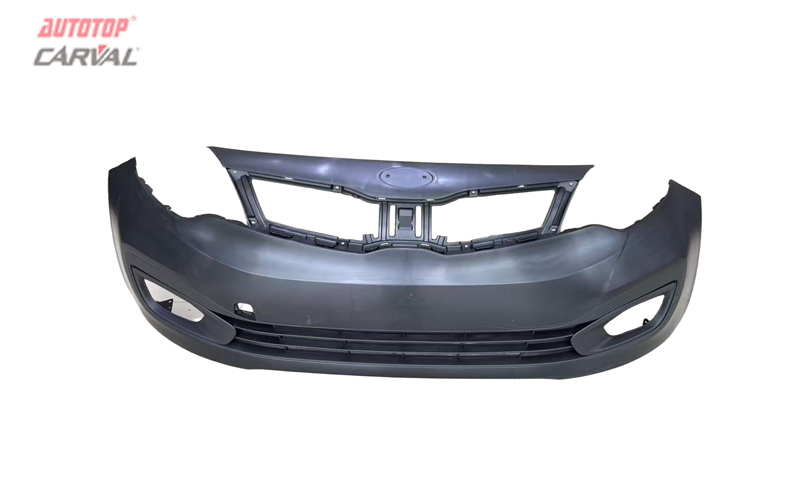
Cover only or full assembly? If the impact was light and the hardware behind the cover is intact, a bare cover is the economical choice. If brackets, the absorber or sensor holders were damaged, a full assembly avoids mixing old and new hardware. Check what transferred undamaged before deciding, not after ordering.
Which variant? Covers differ between trims by sensor holes, headlamp washer cut-outs, tow-hook openings, fog lamp trims and radar-transparent zones. Two covers for the same model year can be incompatible. Match by OE number where available, or send the VIN and let the supplier confirm before you pay.
Which finish? Primed for body shops with their own paint line and for older vehicles needing a blended match; pre-finished for newer vehicles where the original colour still matches across panels.
The most common false economies we see from the outside:
Each of these is avoidable with one habit: confirm the variant, the included parts and the packaging before payment, in writing.
Insurance programmes often specify whether the replacement must match certain part categories, and leases may require new parts. Workshops quoting insurance jobs should price the documentation and calibration lines explicitly rather than absorbing them. And if a vehicle is under warranty, dealer confirmation first avoids disputes later.
How much does it cost to replace a front bumper? It depends on four things: whether you need a bare cover or a full assembly, whether paint is required, how much hardware behind the cover was damaged, and whether the vehicle needs sensor calibration afterwards. A quotation that does not itemise these is difficult to compare.
Is replacing cheaper than repairing? For visible cracks, usually yes once shop time is counted honestly: repair time is unpredictable, while replacement is a known quantity once the part arrives. Hidden hairline cracks are the exception.
Can I buy just the bumper cover? Yes, if the absorber, brackets and sensor holders survived the impact undamaged. Check them first — a bare cover on damaged hardware turns into a second order.
Why is the same bumper cover priced differently by different suppliers? Moulding quality, material consistency, finish route, packaging and inspection scope. Ask those four questions and the price difference usually explains itself.
Will my parking sensors need recalibration after replacement? If the cover carries sensors or sits in front of radar or camera systems, the systems generally need checking after the panel is disturbed. Calibration is workshop work with proper targets — plan for it when budgeting.
Changzhou Jiahong Auto Parts Factory manufactures injection-moulded bumper covers and assemblies for Hyundai, Kia, Daewoo and Chevrolet applications. Send the VIN or OE number and we confirm the variant before you order — sensor holes, washer cut-outs and included hardware itemised in the quotation. Primed and finished options available, with export packaging designed for large clip-fitted panels.

Master
AUTOTOP